

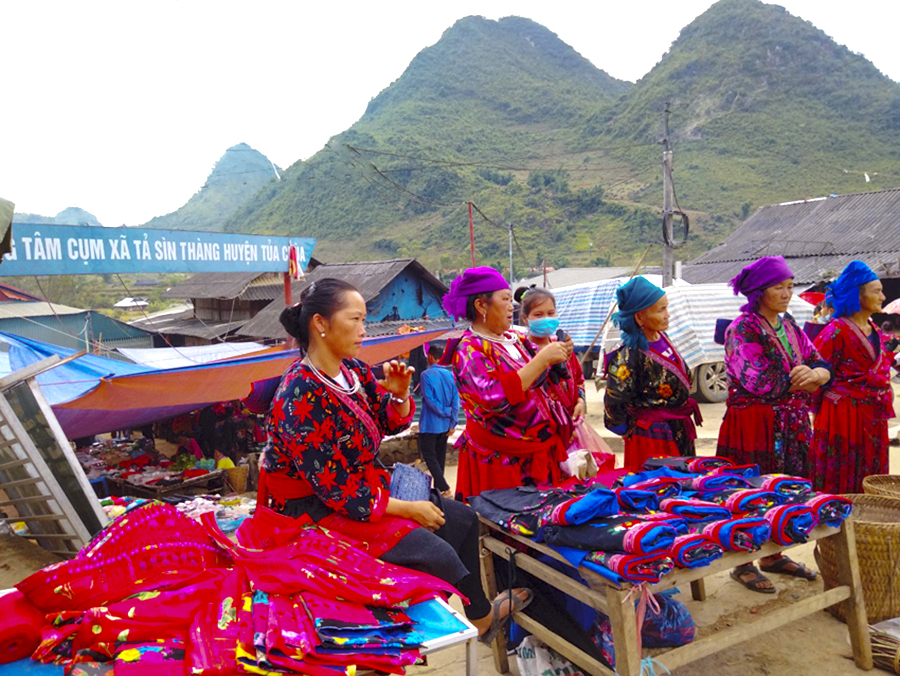
(TITC) – Tua Chua (Dien Bien), with its majestic karst plateaus and rolling mountain ranges shrouded in year-round clouds, does not only impress visitors with its pristine natural landscapes. It also captivates them with the unique cultural values of ethnic minority groups such as the Mong, Hoa, and Kho Mu. Among these, the traditional manual embroidery and weaving crafts stand out as vibrant symbols of each ethnic identity.
1. THE WEAVING AND EMBROIDERY OF THE MONG PEOPLE
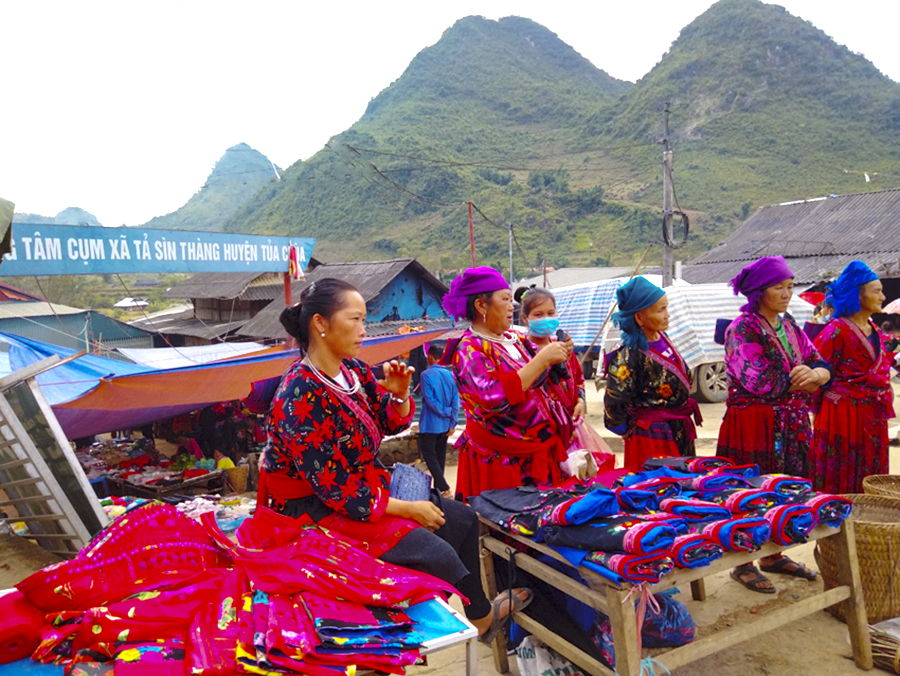
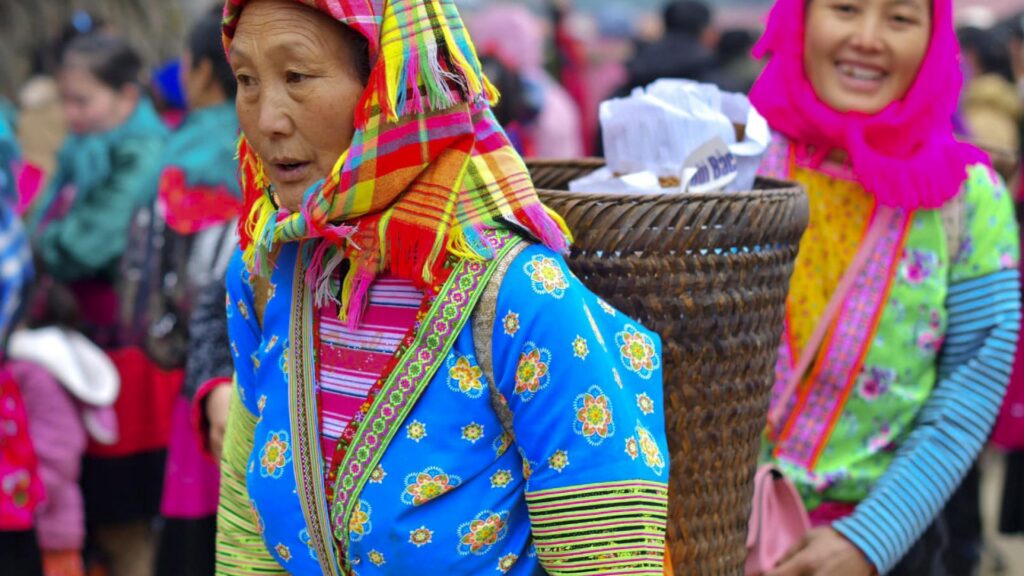
Brocade weaving and embroidery are long-standing traditional crafts of the Mong people in Tua Chua, deeply intertwined with their daily lives and passed down through generations. In Tua Chua, it is common to see Mong women skillfully embroidering while carrying their children on their backs, or groups of women gathering to sew skirts and shirts while basking in the sun in the spring fields after harvest.
- The Traditional Process: Previously, every brocade product was the culmination of a meticulous process: from growing flax and weaving fabric to beeswax printing, indigo dyeing, and finally embroidery.
- Skill and Dedication: Almost every Red Mong woman in Tua Chua knows how to weave, embroider, and draw with beeswax. However, their products were primarily for family use because the process—from weaving the fabric to completing a single skirt—could take an entire year. Even the most diligent worker could only produce about two skirts per year.
- Modern Adaptation: Today, flax weaving has declined as mass-produced fabrics are cheaper and more diverse. Mong women now often buy ready-made fabric and focus on manual embroidery to create outfits for personal use or for sale at local markets. Each product is not just a display of manual skill but a symbol of the ingenuity, perseverance, and creativity of the Mong women.
2. THE EMBROIDERED SHOE-MAKING CRAFT OF THE HOA PEOPLE
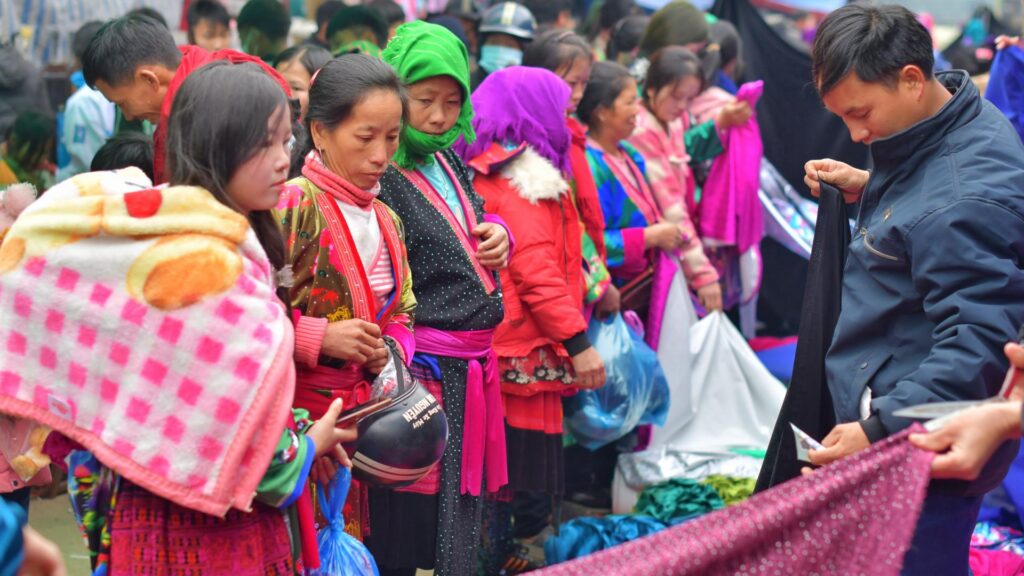
In 2021, the embroidered shoe-making craft of the Hoa (Xa Phang) people in Tua Chua was officially recognized by the Ministry of Culture, Sports and Tourism as a National Intangible Cultural Heritage.
- Diversity of Styles: These embroidered shoes are categorized by gender, age, and purpose, including styles for men, women, the elderly, and even specific designs for brides and grooms.
- Exquisite Craftsmanship: Every pair of shoes is meticulously handcrafted by Hoa women. The process includes making the soles from bamboo sheaths, embroidering intricate and vibrant patterns, and stitching the body to the sole with extreme precision.
- Durability and Meaning: The stitching is hidden yet incredibly durable. It takes approximately 10 to 12 days of focused labor to complete a single pair. Beyond professional skill, this craft carries deep humanistic messages about a positive lifestyle, patience, and the legendary diligence of the Hoa people in Tua Chua.
3. THE BROCADE WEAVING OF THE KHO MU PEOPLE
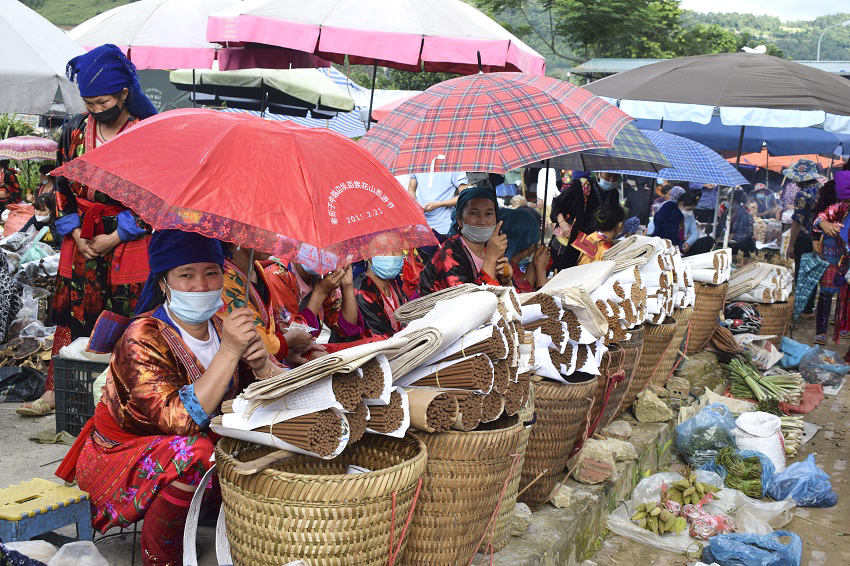
The Kho Mu people account for less than 1% of the population in the Tua Chua area, living primarily in Pu On village. They maintain the tradition of weaving brocade bags, which serves both cultural preservation and local livelihoods.
- The Artisans: The weavers are typically elderly Kho Mu women who work diligently at simple looms to create signature brocade bags of various sizes and colors.
- Economic Value: It takes about two weeks to finish a single bag from the weaving stage to the final product. Today, these bags are sold for approximately 250,000 to 300,000 VND each, providing a source of income for the community.
- Cultural Significance: These traditional bags are indispensable items in Kho Mu culture, used in daily life as well as in important ceremonies like weddings.
CONCLUSION: PRESERVING HERITAGE FOR SUSTAINABLE TOURISM
Traditional crafts—including embroidery, weaving, basketry, blacksmithing, and musical instrument making—have been part of the history of the Mong, Hoa, and Kho Mu ethnic communities for ages.
These products are not merely results of labor; they contain profound spiritual values, support livelihoods, and foster community cohesion. In modern life, preserving and promoting these traditional crafts is vital. It not only protects intangible cultural heritage but also serves as a practical solution for sustainable tourism development in the highlands of Tua Chua.
Google map: Link
 Thu Ha